
- Digital Twins: A digital counterpart for a new concept of Product
-
Digital Twins, are digital replicas of physical assets, processes, or systems used to simulate, monitor, and optimize their real-world counterparts. Through real-time data exchange and advanced analytics, digital twins provide a virtual environment for testing scenarios, predicting outcomes, and enhancing decision-making. This concept, first introduced by Michael Grieves in 2002, has rapidly evolved and now plays a crucial role in various sectors, including manufacturing, healthcare, smart cities, supply chains, and more.
They serve as the foundation for emerging tools like the Digital Product Passport, which aims to enhance transparency, traceability, and circularity in product lifecycles.
Digital Twins are the entry point and keystone transitioning to Industry 4.0. In the context of Industry 5.0, they align with goals such as human-centric innovation, sustainability, and resilience.
- Agents are choosing the software infrastructure now, and we’re not really ready
-
With agents making the choices technical and developer marketing disciplines are going to be fundamentally reworked. We’ll certainly see attempts, many successful, to game the system – GitHub stars for the agent era. SEO for software agents (GEO). The zone will be flooded with vendor slop.
All that said, I remain cautiously optimistic. Trust and authenticity and clarity perhaps have more value than ever – the need to understand and synthesise the choices and thoughts of smart engineers to get better work done. Models need good signal and inputs to have good outputs. Agents are the new new kingmakers, but humans are still very very good at systems thinking, architecture, and creative thinking. I plan to recommit to writing more to help stake my claim, and help others navigate, this new frontier.
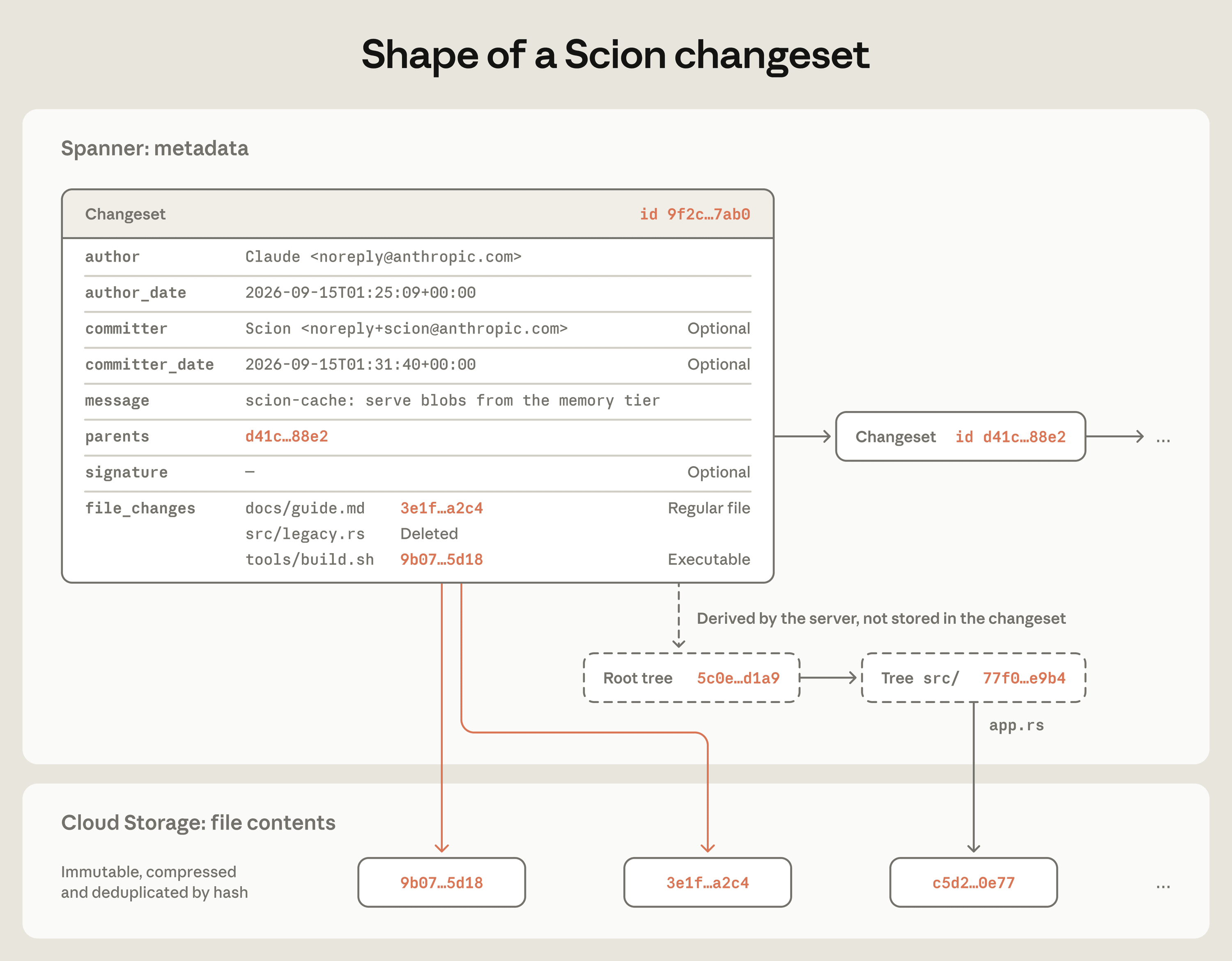
- How Anthropic Redesigned Source Control for AI-Driven Development
-
- How We Share Foojay Posts on Social Media
-
Not unsimilar to how I do it. I guess that if you want to post across different social platforms, your foundations are more or less the same.
- Be Aware of What’s in Your Logs
-
Good advice. Very good advice. Amazing advice.
- Turning Books into Actionable Agent Skills: A Deep Dive into book-to-skill (and Docling)
-
An interesting alternative to RAG. I wonder why the author doesn’t compare it though. In terms of storage costs, I’m not sure it’s worthwhile.
- What Is the Best Local LLM for Mac in 2026?
-
I’m still trying to find what local model fits my machine best.
memory everyday chat and writing coding and agents 8GB
Gemma 4 E2B
Qwen3.5-4B
16GB
Gemma 4 12B (E4B on M1 to M3)
Ornith-1.5-9B or Qwen3.5-9B
24GB
Gemma 4 26B-A4B
Qwen3.6-35B-A3B at 3-bit
32-36GB
Qwen3.6-35B-A3B
Qwen3.8-27B with MTP
48-96GB
Qwen3.6-35B-A3B at 8-bit
Qwen3.8-27B (8-bit on a Max or Ultra)
128GB
Qwen3.8-Flash-Next
Qwen3.8-Flash-Next
192GB
GLM-5.3-Flash at 3-bit
GLM-5.3-Flash at 3-bit
256GB
GLM-5.3-Flash
GLM-5.3-Flash
512GB
GLM-5.3
GLM-5.3
- 10 MCP Servers That Do Things I Didn’t Know MCP Could Do
-
- Semble
- Serena
- code-review-graph
- AgentMail
- Atomic Mail
- OpenTabs
- Home Assistant MCP
- LegalMCP
- Remotion MCP (already shut down)
- Sequential Thinking
I need to try the first 3. The next 2 could open some interesting use cases.
- Jepsen report of Particle DB
-
As far as I remember, I only saw a single Jepsen report "pass", but this one is particularly interesting.
Large Language Models enable small teams to produce software and documentation of staggering scope and complexity in a remarkably short time. Five years ago, writing a distributed SQL database of this scope might have taken hundreds of person-years.15 With LLM assistance, a handful of engineers at Orkes were able to produce a highly sophisticated database system.
However, our work on ParticleDB (and other databases) suggests there are serious tradeoffs to relying on LLMs. Quality suffered: ParticleDB was a fractal of correctness errors. LLM tooling repeatedly claimed that bugs had been fixed when, in fact, they had not. ParticleDB also seemed more difficult to understand than typical databases. As with most Jepsen analyses, Orkes engineers offered detailed explanations of the causes and resolutions of the bugs we found in Conductor. However, Orkes seemed unable to explain the causes or resolutions of nearly every issue we found in ParticleDB. New builds simply materialized, sans changelogs, each hopefully containing a slew of improvements.
Do I understand correctly that engineers working on the product are unable to explain the generated code? It makes me wary of the next wave of products.
- An outsider’s perspective on Scion and Mononoke
-
I have never run into this kind of large-scale Git issues, but it’s interesting to see a critical review of the original Anthropic blog post.
Also, Git is basically a client component, which was created to avoid server-related issues, e.g., Subversion. I wonder if server-based VCS are going to be mainstream tomorrow?
- Why Companies Hesitate to Hire Workers Over 50 (No, It’s Not Just Age)
-
As I now belong to this category…
- The Longevity Myth
- The Cost of Hiring
- Perceived Inflexibility
- Threat to Younger Employees
- Health Concerns
- Technological Skills Doubts
- Salary Expectation Worries
- Fear of Overqualification
- Concerns About Cultural Fit
- Energy Level Assumptions
- Training and Development Costs
- Retirement Assumptions
- Job Market Competition
- Bias and Stereotypes
As I now belong to this category, I don’t think I check many boxes. However, it’s not about me, but how people perceive me and I can’t do anything about it.
- Samsung Washer Monitor for ESPHome
-
So cool! Does anybody want to manufacture ready-made components for people not born into handy work?
- Why Google Open-Sourced Kubernetes and Still Ended Up Third
-
A Java Geek weekly 161
Digital Twins: A digital counterpart for a new concept of Product. Agents are choosing the software infrastructure now, and we’re not really ready. How Anthropic Redesigned Source Control for AI-Driven Development. How We Share Foojay Posts on Social Media. Be Aware of What’s in Your Logs. Turning Books into Actionable Agent Skills: A Deep Dive into book-to-skill (and Docling). What Is the Best Local LLM for Mac in 2026?. 10 MCP Servers That Do Things I Didn’t Know MCP Could Do.