
- 8 Programming Concepts That Look Useless Until Something Breaks
-
- Invariants: The Rule You Assumed the Code Would Somehow Preserve
- Idempotency: The Protection You Do Not Need Until "Once" Happens Twice
- Atomicity: The Bug Lives Between Two Successful Lines
- Optimistic Concurrency: "Last Write Wins" Is Still Data Loss
- Backpressure: “Process It Later” Stops Working When Later Never Catches Up
- State Ownership: Two Copies Can Both Be Correct and Still Make the System Wrong
- Immutability: The Object Changed After You Thought You Had Already Read It
- Structured Concurrency: The Request Ended. Its Work Did Not.
- Yandex outage: Data shows that instead of going dark, malicious bots went on the move
-
- Search indexing dropped
- Malicious automation migrated instead of stopping
- What I Self-Host, What I Don’t, and Why
-
That’s 17 native services and 11 Podman services, all managed by systemd. htop currently shows about 7.5 GB of memory in use, and CPUs fluctuating between 30% and 40%. It turns out this Mini PC can run a lot! Given how expensive computer hardware has become due to the AI crunch, I hope we’ll continue to see self-hostable projects that prioritize simplicity and efficiency.
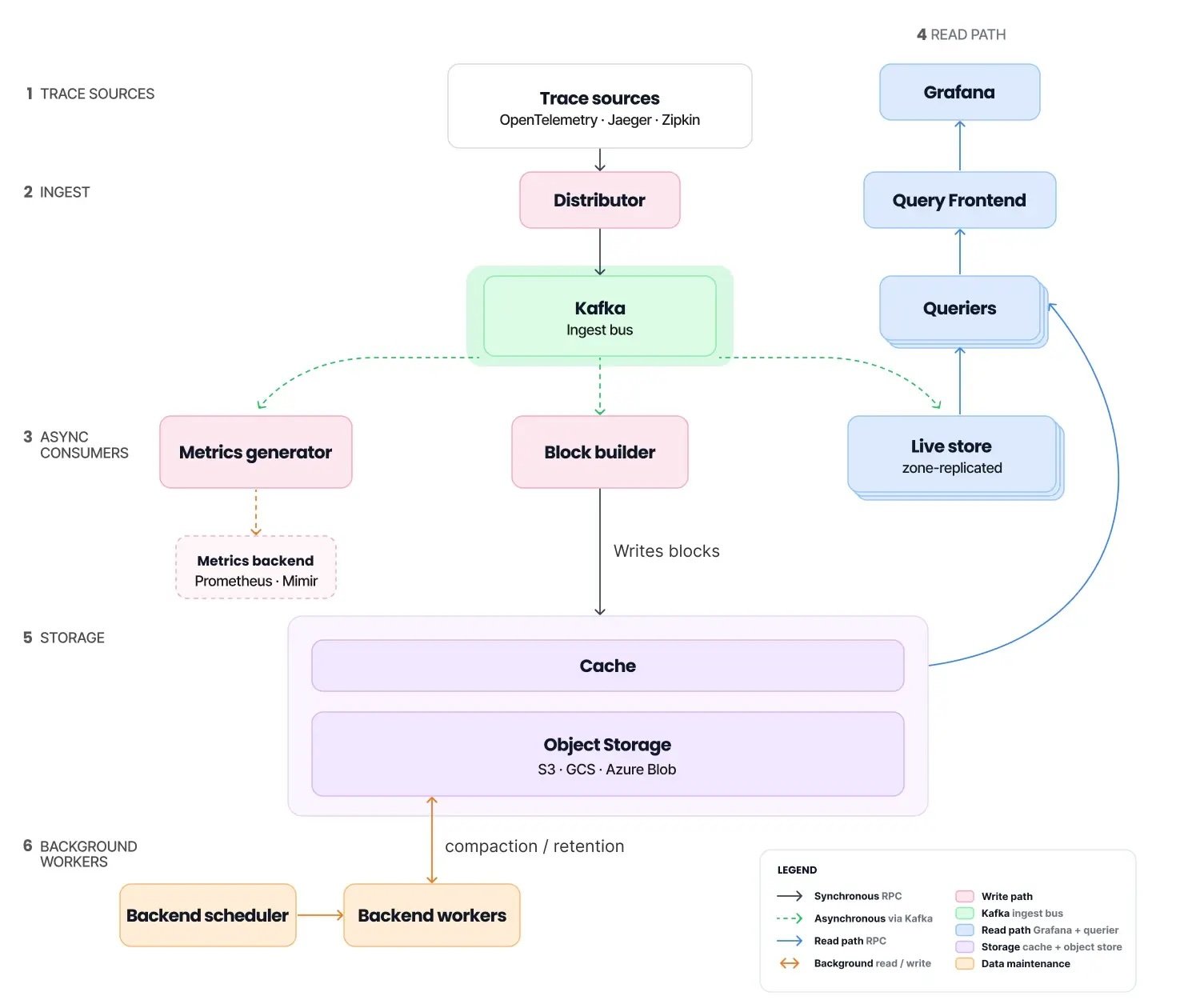
- Grafana Tempo 3.1 Adds Query-Based Trace Redaction and Sampling-Aware TraceQL Metrics
-
- Variance in Generics, Phantom and Existential types with Java and Scala
-
When I taught Java, covariance and contravariance was one of the hardest topics for the students.
- Adding features to the Claude Code harness
-
Ok, that’s my next step. And I already have a feature in mind. I have set up the starship prompt on my terminal:
family-tree on master [$] is 📦 v0.1.0 via 🐍 v3.15.0 on ☁️ nicolas@frankel.ch(europe-west1) took 2sI hate to lose it when Claude Code runs.
- HACS is moving to Home Assistant as Marketplace
-
HACS stands for Home Assistant Community Store. I find it interesting that this community-led marketplace is being "officialized" by Home Assistant. I hope HA will grade the extensions, and vet the best (and more secure!) ones.
- The Golden Path to Become an Agentic Enterprise
-

Step
Description
What it gets you
Goal
1
Sanctioned access
One safe, attributable way for employees to use AI; everything else blocked
Efficiency
2
Safe general-purpose use
Guardrails and cost controls on general AI tools (ChatGPT, Claude, Gemini)
Efficiency
3
Grounded enterprise knowledge
AI answers grounded in your own data, with access control enforced at query time
Efficiency
4
Central governance
One policy, enforced everywhere, with a shared catalog instead of every team rebuilding
Efficiency
5
Governed coding agents
The same governance model applied to coding agents and AI-assisted development
Efficiency
6
Expose capabilities
Your capabilities published as governed MCP servers for external agents to consume
Growth
7
Monetize capabilities
Metering and billing on the capabilities you’ve exposed
Growth
8
Automate processes
Whole operational workflows running agent-first, not just agent-assisted
Efficiency
9
Delegate to agents
Agents acting under a user’s delegated authority, not a standing service account
Efficiency
10
Monetize agents
Agents themselves packaged as products, with outcome-based pricing
Growth
- How the Claude Code team does code review
-
If you wonder how to prevent the review bottleneck, this article is for you.
TL;DR:
- Before the pull request
- Give your agent checks it can run, listed in a short
CLAUDE.md, plus hooks that run formatters and linters. - Run
/code-reviewand/security-reviewlocally, or a fresh-context subagent review. - Add a
REVIEW.md, and move repeated review comments into it.
- Give your agent checks it can run, listed in a short
- On every pull request
- Require CI, and add "Testing", "Risk" and "How to revert" to your PR template.
- Add an AI reviewer (Code Review for Claude Code, or the Claude Code GitHub Action) on one repo, tune
REVIEW.mdfor a few weeks, then widen. - Add automated security review, and require every review thread resolved before merge.
- Match review effort to risk: a quick pass on routine changes, a deep one where a missed bug is expensive (Quick, Standard or Deep in Code Review).
- Cap review rounds; after the first few, re-review only the new diff.
- Approval
- Write down risk tiers, set from the change rather than the author; start strict and loosen with evidence.
- Keep the lighter approval paths for authors you trust.
- Use
CODEOWNERSand branch protection so auth, billing, CI and release workflows, and installers always need a person. - Never let a bot’s approval replace a required human’s; dismiss approvals on new commits.
- Merge and after
- Use a merge queue, feature flags, internal use first, staged releases and one-step rollback.
- Turn incidents and reverts into an eval set, and rescore the reviewer whenever its prompts, tools or model change.
- Measure human time, with revert and incident rates as the guardrail.
- Before the pull request
- How I Scaled Agents Beyond My Home Server
-
I’m very happy to hear a prominent Cloud/DevOps voice mention the harsh reality. Cloud is good for elasticity when you have usage peaks. For the baseline, it’s cheaper to buy a box tailored for your regular usage. Please listen to this!
A Java Geek weekly 159
8 Programming Concepts That Look Useless Until Something Breaks. Yandex outage: Data shows that instead of going dark, malicious bots went on the move. What I Self-Host, What I Don’t, and Why. Grafana Tempo 3.1 Adds Query-Based Trace Redaction and Sampling-Aware TraceQL Metrics. Variance in Generics, Phantom and Existential types with Java and Scala. Adding features to the Claude Code harness. HACS is moving to Home Assistant as Marketplace. The Golden Path to Become an Agentic Enterprise.