
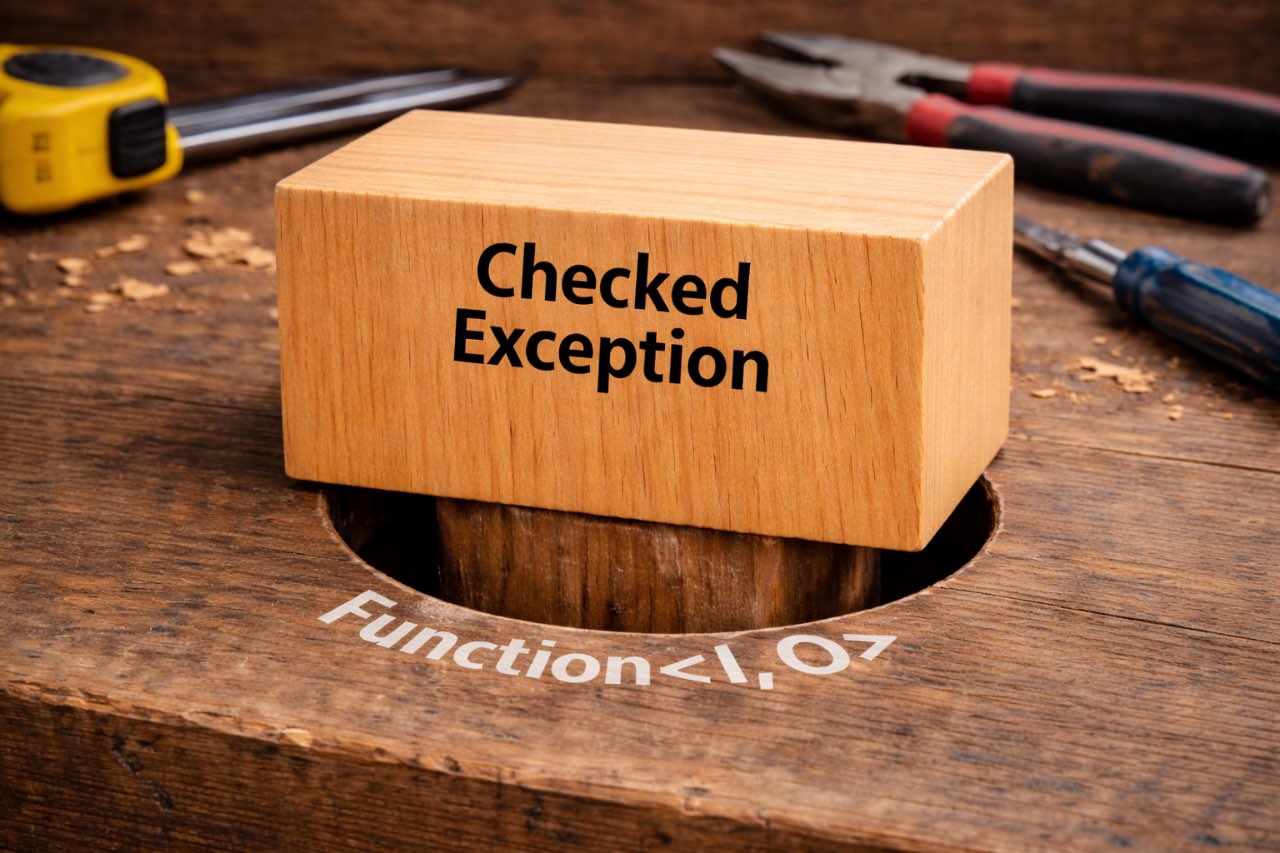
I got a lot of interesting feedback on Checked exceptions and lambdas. Let’s start with my own: after writing the post, I realized I had written a similar post some time ago.
Mistakes I made
I made a mistake in the code regarding Apache Commons Lang 3, where I mistakenly used the recover() function, which is actually from Vavr.
Apache Commons Lang provides a regular utility function, which mimics the custom code we wrote last week.
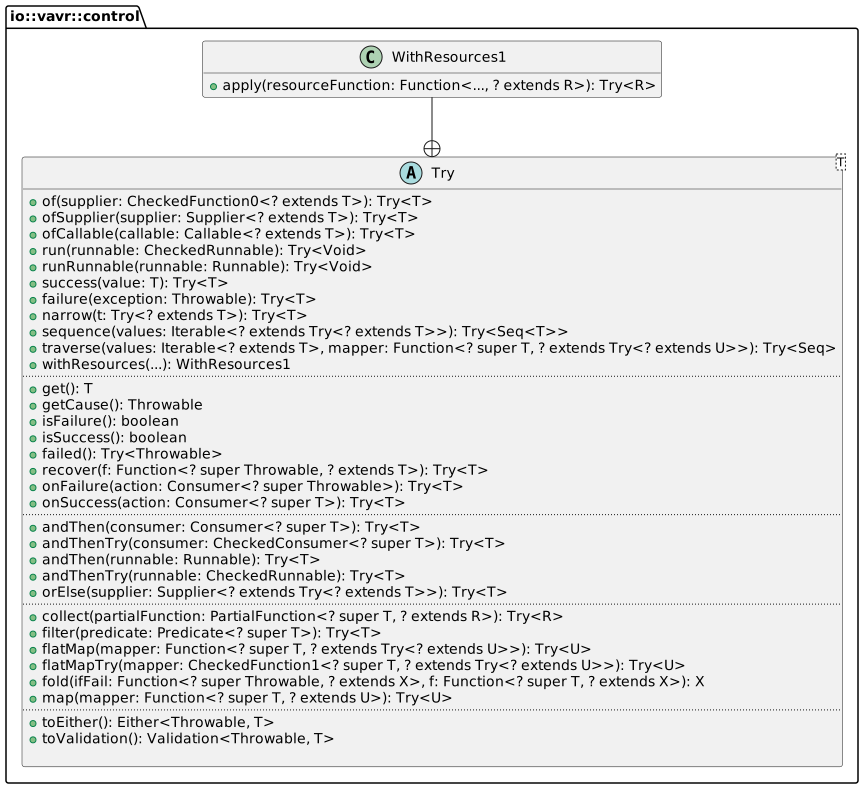
Vavr offers the Try class, which encapsulates methods that throw checked exceptions.
It also bridges Java to a more functional style.
Here’s the corrected code using Try:
var foo = new Foo();
CheckedFunction1<String, String> throwingFunction = foo::throwing;
var result = List.of("One", "Two").stream()
                 .map(input ->
                     Try.of(() -> throwingFunction.apply(input))
                        .recover(IOException.class, e -> "")
                        .getOrElse("")
                 ).toList();
Vavr’s API is quite large, but Try itself has a pretty understandable surface:
Things I forgot
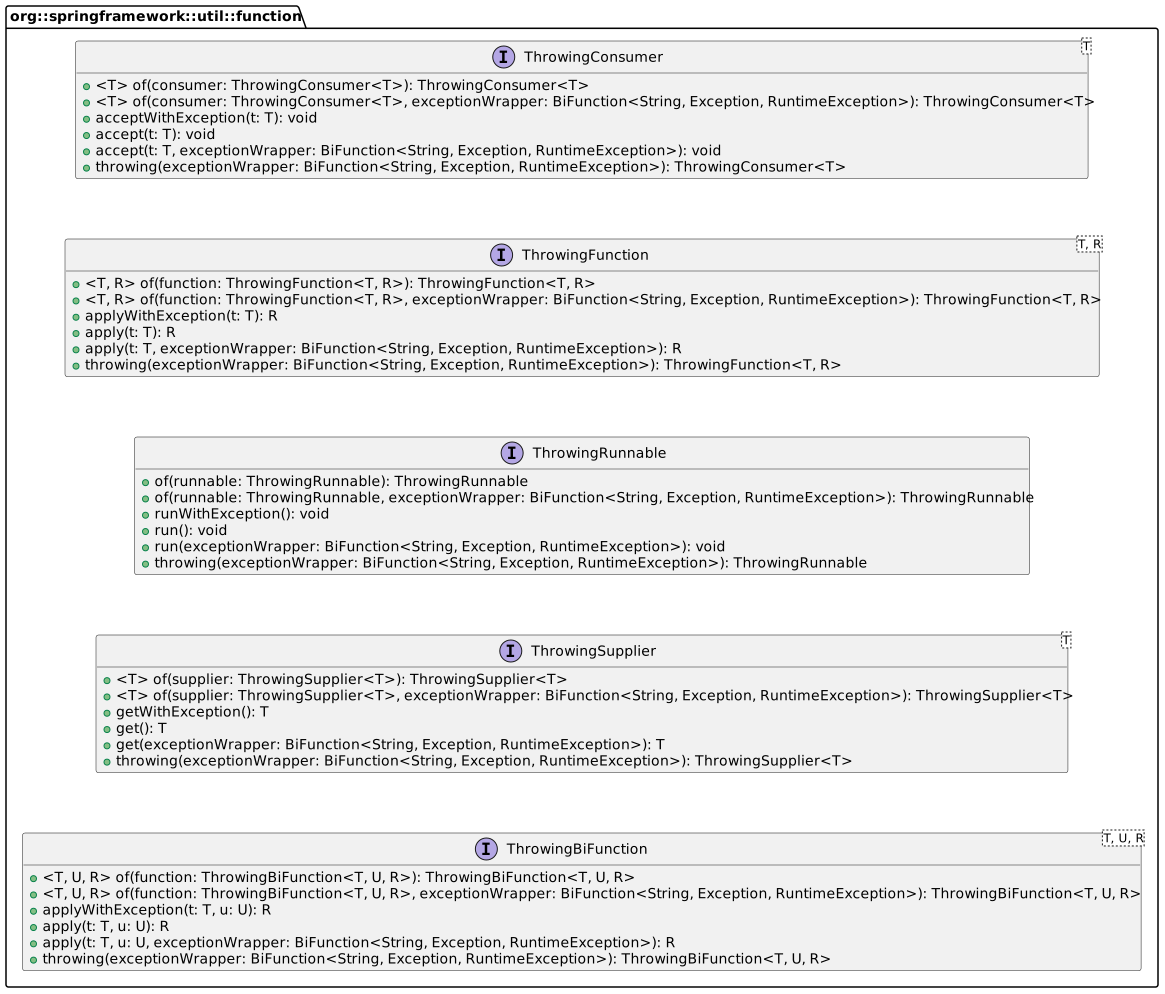
On Mastodon, Oliver Drotbohm pointed out that the Spring Framework has wrapping utilities:
Things I learned
Another feedback I don’t remember where from mentioned Result4J. It’s a library I never heard of before.
The project provides Result-type similar to Result-type in Rust that allows to return either successful result or otherwise some kind of error.
In Java, the native way of reporting errors are exceptions, either checked or unchecked. You do not need Result-type most of the time in Java-code, where you can directly throw exceptions. But there are situations, where more functional-style is used. In such situations pure-functions are expected that throw no exceptions. Handling exception in such situations can be cumbersome and require a lot of boilerplate code. Result-type and associated helper-classes help with exception handling and allow to write idiomatic functional code that can interact with methods that throw exceptions.
You can use it in the following way (from the README):
Catcher.ForFunctions<IOException> io = Catcher.of(IOException.class).forFunctions();
String concatenation = Stream.of("a.txt", "b.txt", "c.txt")
                .map(io.catching(name -> loadResource(name)))
                .collect(ResultCollectors.toSingleResult(Collectors.join()))
                .orOnErrorThrow(Function.identity());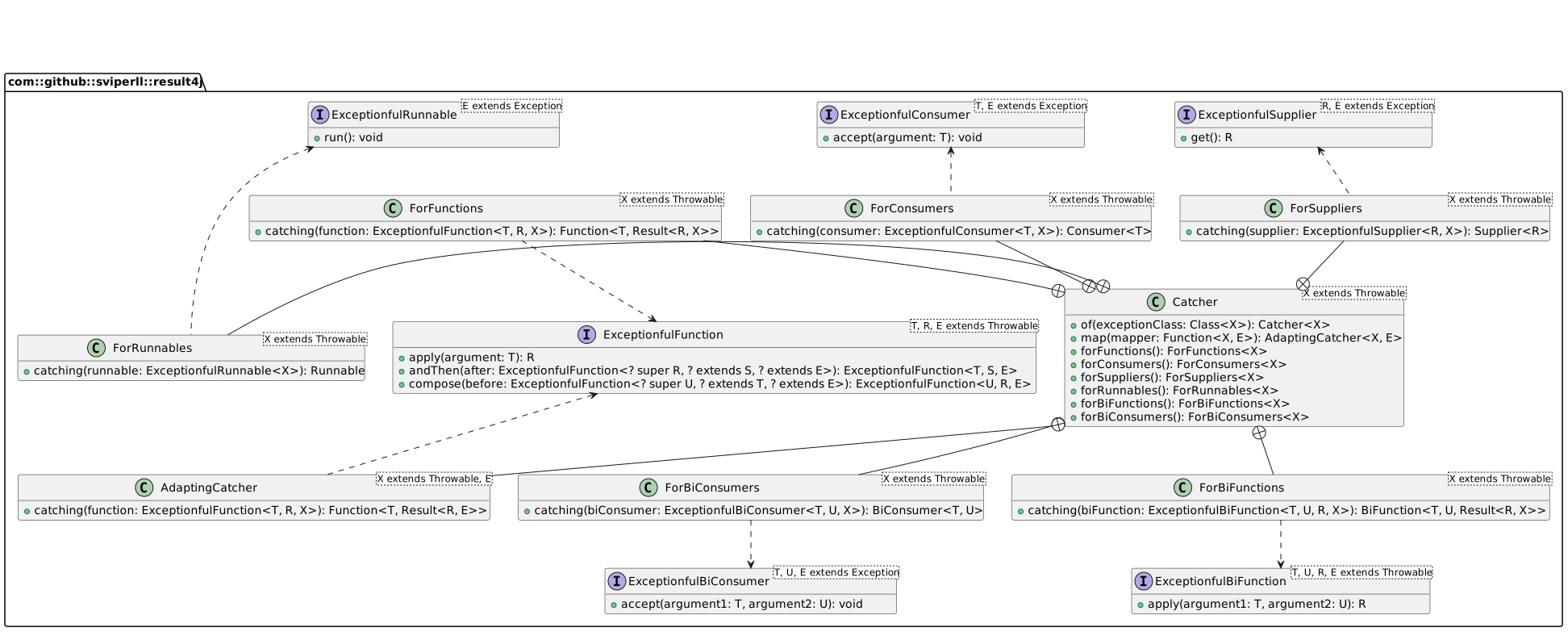
Additional feedback
On Bluesky, Donald Raab, Eclipse Collections' former designer, mentioned a post of his about how Eclipse Collections handles checked exceptions.
Thanks for sharing! I wrote the following blog about "Exception Handling in #EclipseCollections" a few years ago. There's a link to a great blog from @brianvermeer.nl in here as well. 🙏 medium.com/javarevisite...
— Donald Raab (@thedonraab.bsky.social) Jan 18, 2026 at 19:30
[image or embed]
You can read the post here. It also references another interesting read by Brian Vemeer on the subject, Exception Handling in Java Streams.
Conclusion
Feedback is always great. Thanks to feedback, I realized I made a mistake, received pointers to the same features in Spring, and discovered result4j. Having coded for years in Kotlin and more recently in Rust made me appreciate the Result approach. I’ll evaluate the usage of result4j as an alternative to Vavr in future projects.